Explore hospitality real estate development and how thoughtful design, strategic investment and integrated operations are shaping the destinations of tomorrow.
The most memorable destinations are never just buildings.
Architecture matters. Location matters. But what guests carry home with them, what makes them return, what makes them tell others, is rarely a room or a view. It is a feeling. The sense that a place was made with genuine intention, that it could not exist anywhere else, and that being there changed something in them, however slightly.
This is the territory that hospitality real estate development occupies at its best. Where property meets experience. Where investment meets story. Where a piece of land becomes somewhere worth travelling for.
What Is Hospitality Real Estate Development?
Hospitality real estate development is the planning, design and creation of properties built specifically for travel and guest experience. Unlike residential or commercial real estate, where success is measured in occupancy or yield alone, hospitality properties live or die by how they make people feel.
The layout of spaces, the relationship between architecture and landscape, the flow of a guest's first hour on arrival. These are not decorative considerations. They are the difference between a property that performs and one that merely exists.
In other words, hospitality development is not about building a property. It is about designing an experience that happens to have walls.
Types of Hospitality Real Estate
The sector is broad and genuinely diverse.
Hotels remain the most recognised form, ranging from boutique properties with ten rooms to large-scale luxury resorts. Resorts take the concept further, creating complete destinations where accommodation, dining, wellness and experience are designed as a single integrated offer.
Restaurants, bars and social venues form an important part of the ecosystem. Wellness centres and spas have become an increasingly significant segment, reflecting a genuine shift in what modern travellers seek when they travel.
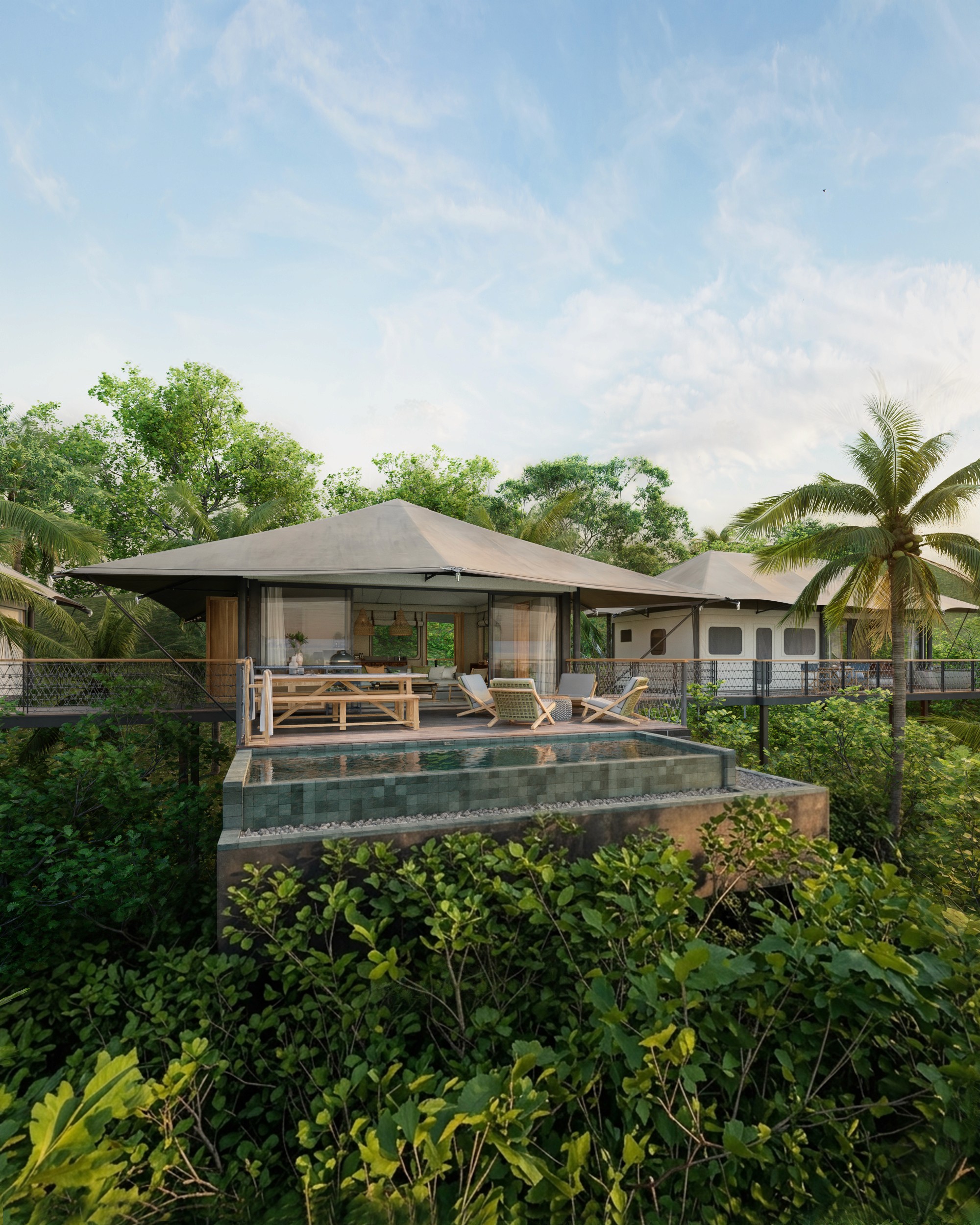
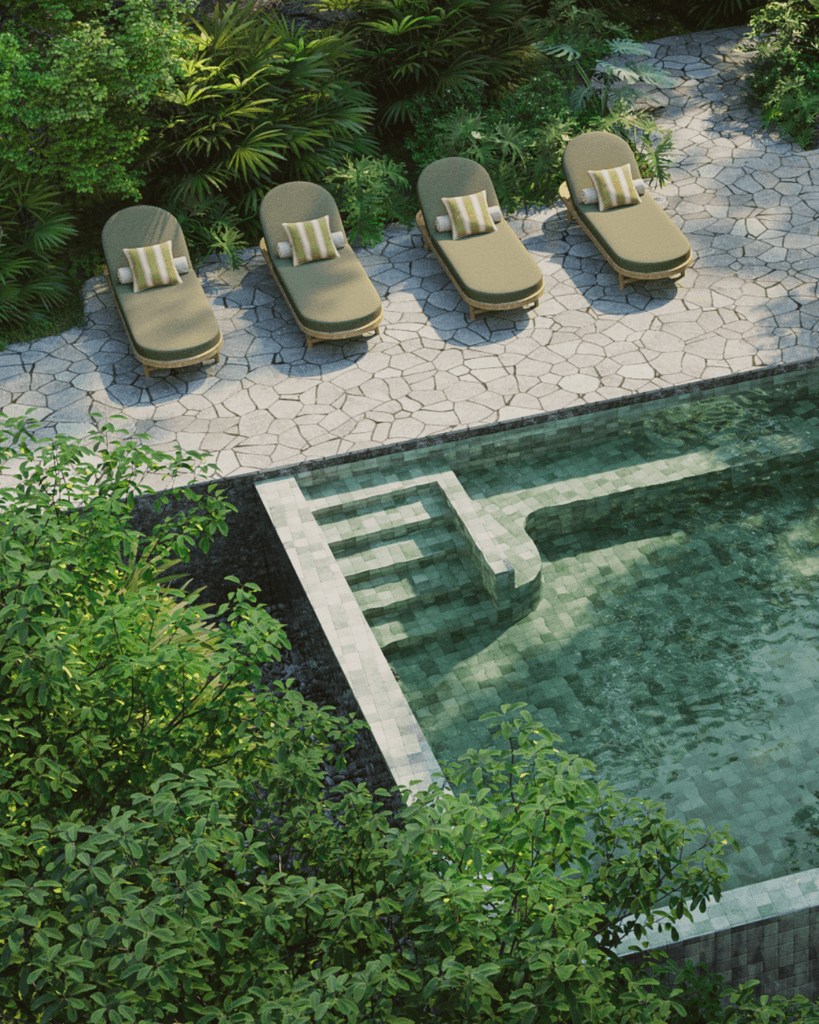
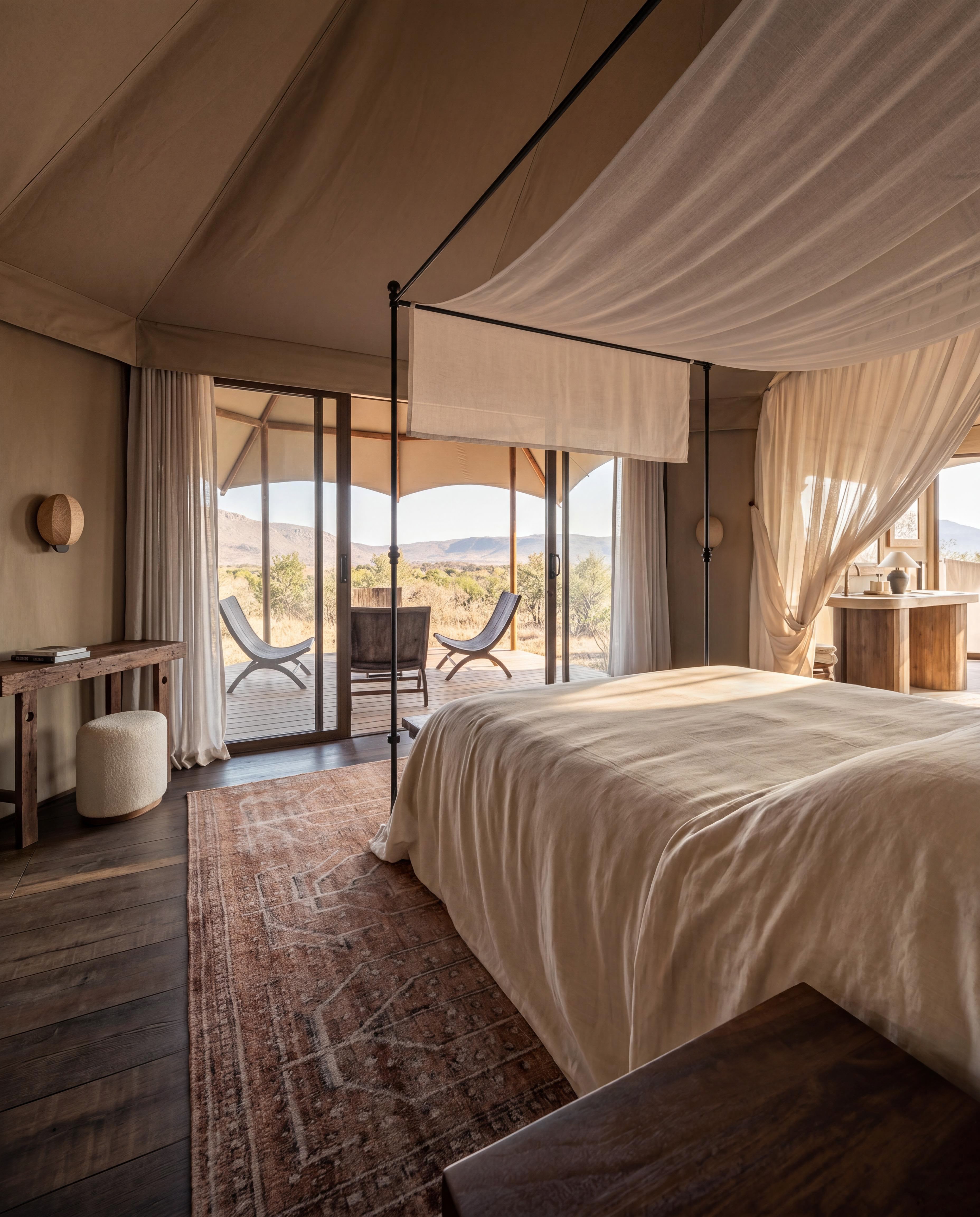
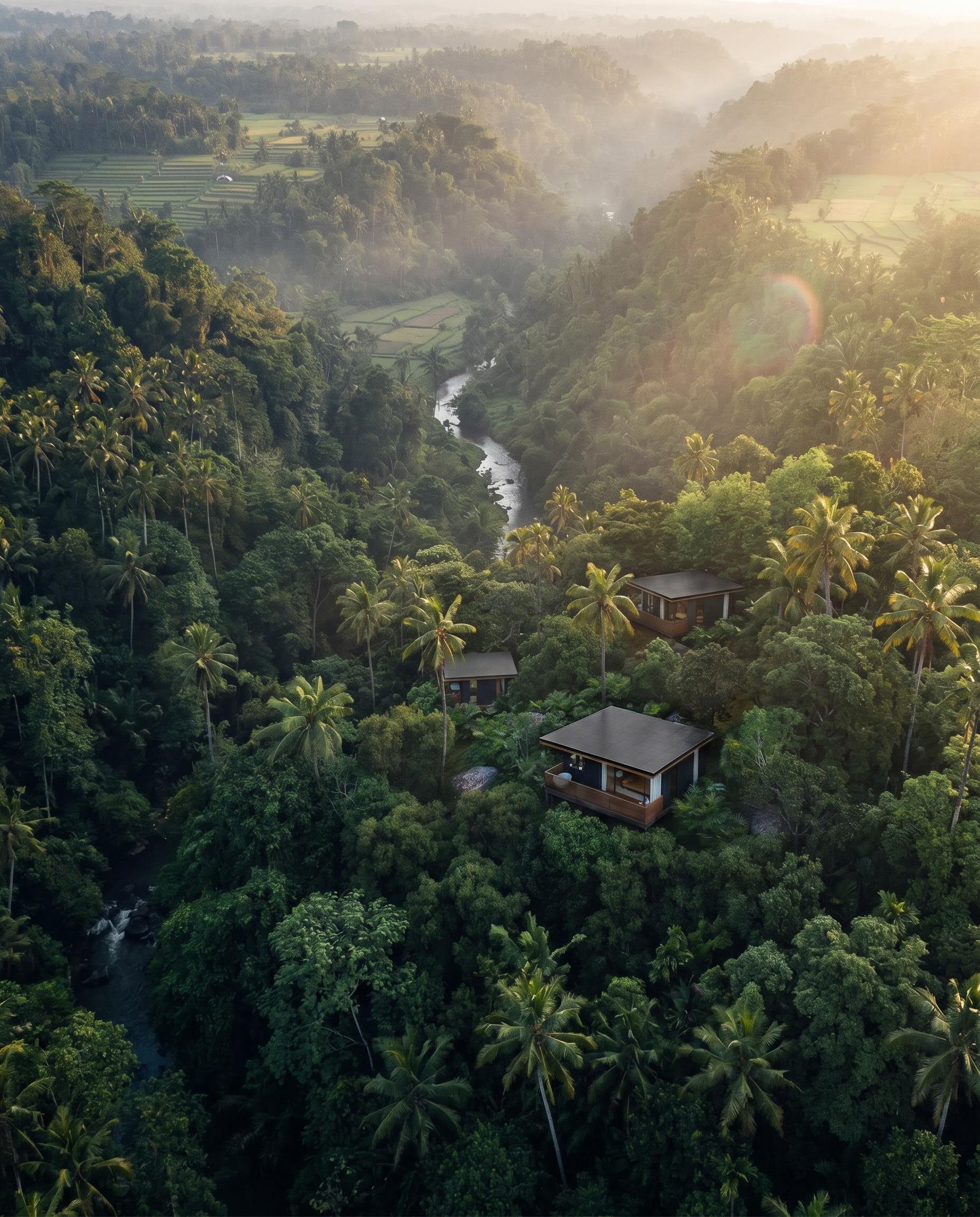
And then there is the category that is growing fastest of all: nature-based, outdoor and experiential destinations. Tented resorts, luxury cabins, design-led camps. Properties that place the landscape at the centre of the experience rather than competing with it.

What Makes Hospitality Real Estate Unique
Hospitality real estate operates differently from every other sector of the property market because success is inseparable from experience.
Location matters, but thoughtful design and a compelling sense of place can elevate a destination far beyond its geography. Operational efficiency matters, but so does the warmth of a team member's welcome on arrival. Market conditions matter, but a destination with a genuine point of view has a resilience that purely transactional properties rarely achieve.
Perhaps most importantly, hospitality real estate must evolve. Travel patterns shift. Guest expectations rise. The destinations that endure are the ones designed to grow and adapt, not simply to open.
Key Factors in Hospitality Real Estate Development
Successful hospitality development requires a particular kind of thinking. Several factors consistently separate properties that perform from those that underdeliver.
Location and destination appeal set the foundation. Proximity to extraordinary landscapes, cultural depth or underserved markets can shape a project's entire trajectory.
Scale and design shape the guest experience from first arrival to final departure. Boutique properties can offer intimacy and personalisation that larger resorts cannot. Larger properties can offer breadth and variety that smaller ones cannot match. The question is always which is right for this specific place.
Market conditions and competitive positioning determine how a destination finds its audience. The most successful properties are rarely the most obvious ones. They are the ones that identify a genuine gap and fill it with something that could not be replicated elsewhere.
The Role of Strategy in Hospitality Investment
Hospitality real estate investment requires more than capital. It requires conviction.
Long-term investors benefit from property appreciation and operational income in high-demand destinations. Those with shorter horizons can find value in early-stage development opportunities, entering projects before the market fully prices in their potential.
Repositioning underperforming assets is another compelling strategy. The right concept, applied to the right property in the right location, can transform something overlooked into something genuinely desirable.
Each approach demands an understanding of market dynamics, development costs, and above all, what makes a guest choose a destination and return to it.
A New Era of Hospitality Development
The industry is shifting in ways that feel less like a cycle and more like a structural change.
Travellers are choosing experience over standardisation. Destinations that embrace nature, design and cultural authenticity are outperforming those built around convention. The demand for outdoor hospitality, for nature retreats, tented resorts and design-led camps, is not a niche. It is a direction.
Development itself is also changing. Modular construction and off-site manufacturing have compressed timelines that once stretched across three or more years to twelve months or less, without compromising design integrity or guest experience. Light-footprint structures have made it possible to develop in locations that conventional construction could never reach.
Sustainability has moved from aspiration to expectation. Responsible land use, renewable energy and architecture that respects its ecosystem are no longer points of differentiation. They are the baseline.
Together these shifts are redefining what hospitality real estate development looks like and who it is for.
Read more: Outdoor Hospitality Investment and Development
Building the Future of Hospitality Destinations
The most successful hospitality developments today share a common quality. Development and operations were never separate conversations.
When a destination is conceived from the outset with both design and operations in mind, the result is a property built not only for beauty but for lasting performance. One that works for guests, for communities, and for the investors and owners whose capital made it possible.
At Cloud Collective, this integrated approach is not a methodology. It is simply how we think. Every project begins with the same question: what belongs here?
We design, develop and operate experiential hospitality brands built for the modern world. If you are exploring opportunities in hospitality real estate development or considering a new destination, we would love to hear from you.